The Float process & the Tin Bath Roof: essential technologies in flat glass production
The float process, invented in the late 1950s by Sir Alastair Pilkington, revolutionised the global glass industry. It became the worldwide standard for producing high-quality flat glass, used today in architectural glazing, automotive glass, and increasingly in electronic displays such as smartphones, tablets, laptops, and TV screens.
The principle is both simple and ingenious: molten glass floats on a perfectly smooth bath of molten tin, forming a flawless and uniform ribbon.
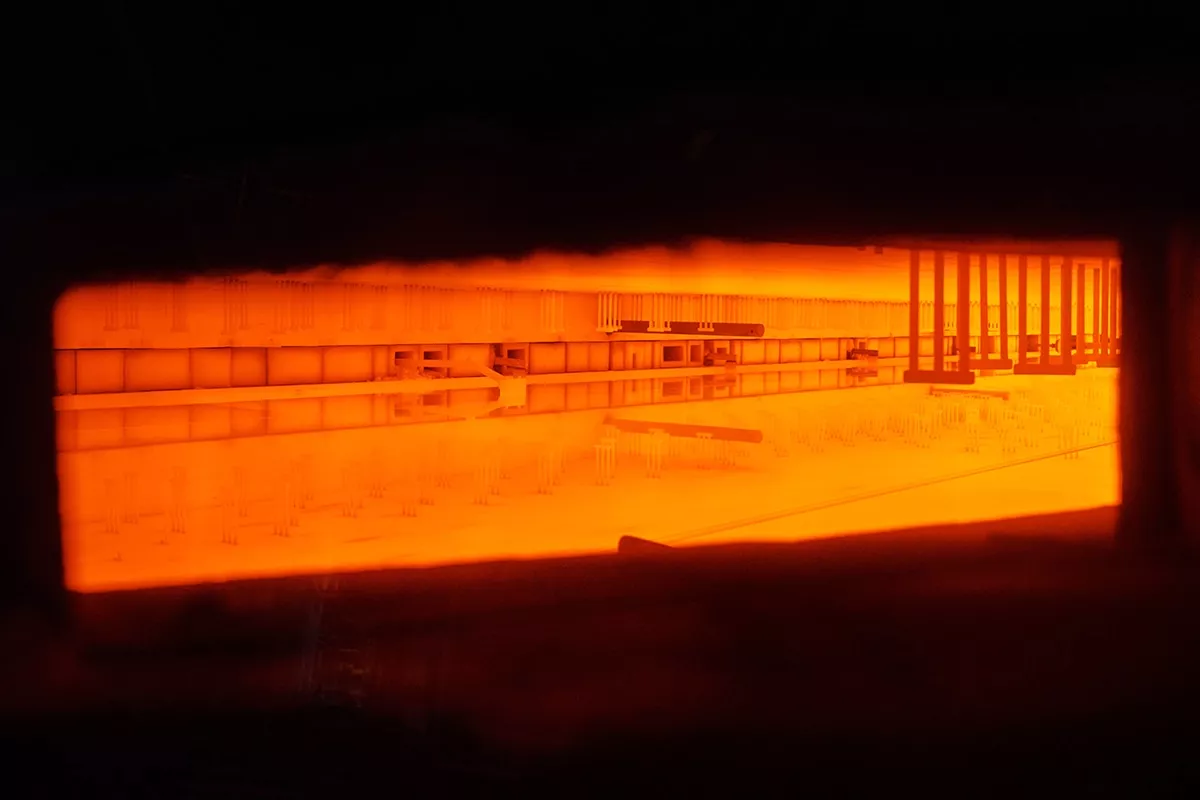
How the Float process works
- Silica sand and raw materials are melted in a furnace.
- The molten glass flows onto a bath of molten tin, spreading naturally into a flat ribbon.
- The ribbon cools under controlled conditions to achieve the required thickness, width, and optical quality.
Because molten tin does not mark the underside of the glass, no mechanical grinding is needed ensuring impeccable flatness and surface quality.
Why the Tin Bath Roof is essential to the float line
Positioned directly above the molten tin, the Tin Bath Roof is a critical component that ensures stable and controlled forming conditions throughout the float process.
It is responsible for:
- Atmosphere control (low oxygen, balanced N₂/H₂ ratios)
- Precise thermal management
- Protection of molten tin from oxidation
- Stability of ribbon width, thickness, and flatness
- Mechanical and dimensional stability of the Tin Bath
A high-performance Tin Bath Roof is indispensable for consistent float line operation and uniform glass quality.
Materials and structure
Tin Bath Roofs must withstand extreme temperatures and a chemically reducing atmosphere. The selection and quality of materials directly impact lifetime and performance.
Common materials include:
- Mild steel main structural elements
- Stainless steel corrosion-sensitive or high-stress areas
- Advanced refractories designed to resist peeling, thermal shock, and in some instances nepheline attack
Using optimised materials significantly extends roof lifespan and ensures long-term stability.
How the Tin Bath Roof works
Thermal control
Heating elements and heaters generate a precise thermal profile:
- Uniform glass thickness
- Stable ribbon width
- Controlled thermal gradient above the tin
High-accuracy pyrometers continuously monitor temperature across the roof.
Atmosphere management
The Tin Bath Roof ensures gas-tightness, preventing oxidation of the tin surface. Optimised gas inlets maintain the correct N₂/H₂ atmosphere with minimal gas consumption.
Mechanical stability
Rails, wide-section modules and EBAs provide the structural rigidity required for distortion-free glass forming.
Technical challenges
Typical issues encountered during the float process include:
- Power loss (humidity, aged cables, damaged elements)
- Refractory corrosion or peeling
- Nepheline formation
- Loss of gas-tightness leading to tin oxidation
Maintaining a stable thermal environment and performing regular inspections are essential for preventing defects and unplanned downtime.

Maintenance: hot and cold repairs
Hot repair
Many components, heating elements and non load bearing refractories can be replaced while the float line remains in operation.
Cold repair
A full shutdown allows:
- Comprehensive inspection
- Structural repair
- Refractory replacement
- Alignment and recalibration
Innovation and optimisation
Current industry advances focus on:
- Tin-saving techniques
- New corrosion resistant refractory materials
These innovations enhance roof lifespan, operational stability, and overall float line performance.
The float process transformed flat glass manufacturing. At the heart of this technology, the Tin Bath Roof provides the precise thermal and atmospheric environment required to produce flawless architectural, automotive, and electronic glass.